English Hubs are able to provide DfE funding to state-funded schools.
The funding is available for schools to purchase a DfE validated Systematic, Synthetic, Phonics (SSP) programme. This includes staff training, online portals, teaching resources and decodable books linked to the school's chosen SSP programme.
The funding can also be used for refresher training, renewing online subscriptions and/or replenishing resources and decodable books.
List of DfE Validated SSP Programmes
English Hub Funding
Hubs may provide up to £3000 funding. These amounts are maximums and should not be considered as an automatic entitlement for every school. Resource funding should be viewed by the school as a contribution, and it must be match funded.
DfE Criteria for Funding
Hubs must prioritise schools that meet two or more of the following criteria:
Key Stage 1
-
lower than average percentage PSC scores for disadvantaged pupils;
-
low attainment in the first 20% of children;
-
a lower than average percentage of pupils meeting the expected standard in the Phonics Screening Check;
-
a higher than average proportion of children eligible for Pupil Premium;
-
previous partner schools who last received intensive support two or more years ago, have experienced significant systemic change since leaving the programme and who have failed to realise and/or maintain improvement in SSP scores;
-
a high proportion of groups considered hard to reach, such as EAL, FSM, travellers etc;
-
schools referred by local partners (e.g. RISE, NLEs, LAs, RSCs);
-
schools where standards in phonics are identified as areas for development through Ofsted inspection findings;
-
schools where there is a risk of declining standards in phonics.
Key Stage 2
-
lower than average KS2 reading outcomes for disadvantaged pupils across three or more academic years;
-
a lower than average percentage of pupils meeting the expected standard in the KS2 reading assessments;
-
schools referred by local partners (e.g. RISE, LAs, RSCs);
-
schools where standards in KS2 reading are identified as an area for development through recent Ofsted inspection findings;
-
a high proportion of groups considered hard to reach, such as EAL, FSM, travellers etc;
-
schools which demonstrate across an average of three consecutive years (2022/23, 2023/24 and 2024/25) a percentage of pupils meeting the expected standard in KS2 reading which is 6 percentage points or more lower than the percentage meeting the expected standard in the Y1 PSC.
Key Stage 3
-
higher than average number of Year 7 pupils who did not meet the expected standard in the KS2 reading assessment at primary school;
-
where disadvantaged pupils' KS4 attainment is below the national average for disadvantaged pupils;
-
a higher than average proportion of pupils eligible for pupil premium;
-
a high proportion of priority groups such as EAL, FSM, travellers etc;
-
a higher than average number of pupils with SEND;
-
where reading has been identified as an area for development by Ofsted;
-
schools in which staff leading in reading are new to their position.
To request in-school support and/or DfE Funding, please complete our Self-Referral Form below:
KS1 Self Referral Form 2026-2027
KS2 Self Referral Form 2026-2027
KS3 Self Referral Form 2026-2027
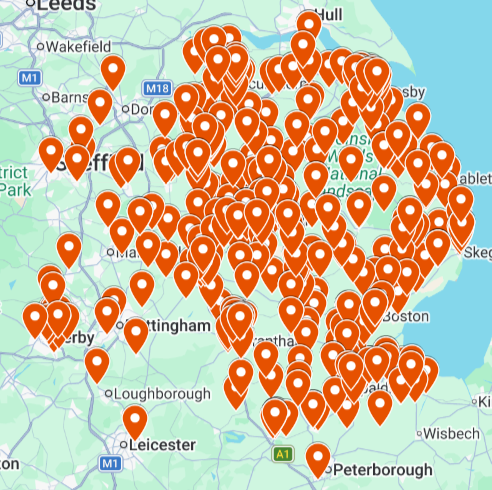
This map shows the schools that have received English Hub funding